Powering the digital economy – Beyond resilience: How technology and on-site generation are redefining sustainable data centres
For data centres, power isn’t just about keeping systems running - it’s about sustainability. As demand for digital services rises, the sector faces the challenge of expanding capacity without increasing its carbon footprint. Success now depends on how smartly data centres generate, store, and manage energy amid rising costs, regulatory pressure, and growing client expectations.
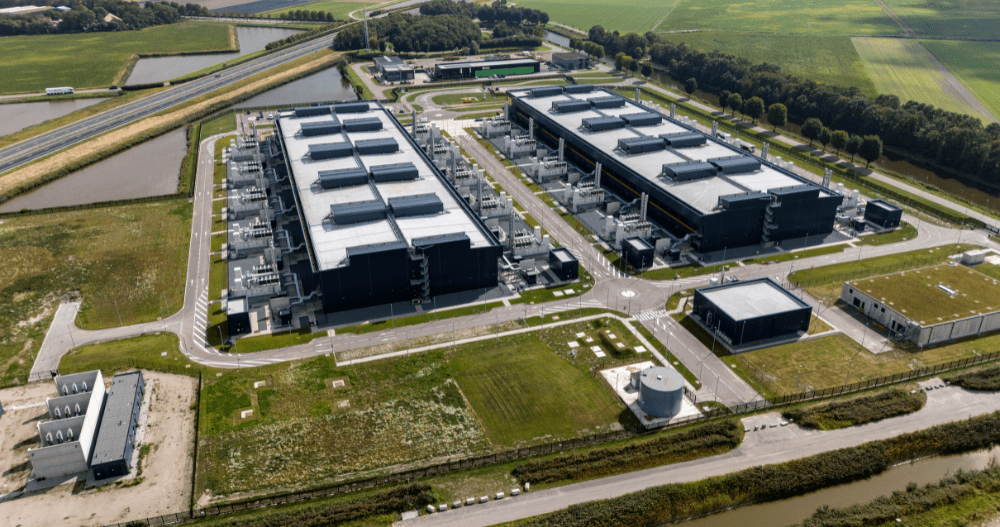
Behind the UK’s burgeoning digital economy lies a hidden infrastructure: the energy that keeps it running. Every innovation in AI, cloud computing, and data analytics depends on electricity that is reliable, affordable, and increasingly, low and zero carbon. But as the demand for data grows, so does the complexity of delivering that power.
This four-part series from Equity Energies explores how data centres sit at the front line of this transformation, facing the realities of grid capacity, rising non-wholesale costs, evolving regulation, and the race to decarbonise, and how the sector’s response could define the future relationship between business, technology, and the energy system itself.
For data centres, power might equal performance, but that also means more than operational uptime; it means sustainability.
As demand for digital services continues to surge, the data centre sector faces a new kind of pressure: to grow capacity without growing its carbon footprint. And as energy costs, carbon regulation, and client and user expectations converge, the sector’s success increasingly depends on how intelligently it generates, stores, and manages its own energy.
Sector scrutiny
Data centres already account for around 2.5% of the UK’s total electricity consumption, and by 2030 that figure is expected to quadruple. This rapid growth has naturally raised legitimate questions about the sector’s long-term sustainability and energy resilience.
Many of the world’s leading operators, including members of the Climate Neutral Data Centre Pact, have pledged to reach carbon neutrality by 2030. It’s important to note, these voluntary commitments go beyond compliance; there’s a commercial imperative driven by clients, investors, and hyperscalers who increasingly require verifiable low-carbon performance from their partners. In short, no effort to decarbonise, no contract.
But the challenge is complex. Data centres need constant, uninterrupted power, yet the UK’s main sources of renewable energy, wind and solar, are intermittent. Matching the sector’s high and steady baseload with variable renewable generation isn’t an easy task and creates both a sustainability and a security dilemma. How to decarbonise while keeping the lights, or in this case the servers, on.
Diesel under pressure
Historically, resilience has meant redundancy. Backup diesel generators have been the go-to safeguard against outages and grid instability. But as sustainability standards tighten, their environmental impact has come under growing scrutiny.
Diesel combustion produces high levels of CO₂, NOₓ, SOₓ, and particulate matter, pollutants now subject to stricter limits under the Medium Combustion Plant Directive (MCPD). Operators who rely on diesel for backup must also navigate emissions compliance under the UK Emissions Trading Scheme (ETS) if their generation capacity exceeds 20 MWth (which refers to thermal input, not electrical output), even if there is minimal actual usage.
This pressure is forcing the sector to find alternatives that deliver the same reliability without the emissions cost.
HVO: the new standard in backup fuel
One of the most effective transitional solutions is Hydrotreated Vegetable Oil (HVO), a renewable diesel alternative made entirely from waste oils and fats. HVO is a drop-in replacement for fossil diesel, meaning it can be used in existing generators with no engine modifications.
The results are significant. Switching from diesel to HVO can deliver up to a 90% reduction in lifecycle greenhouse gas emissions, along with lower NOₓ, SOₓ, and particulate emissions, improving both air quality and sustainability performance. HVO is already being widely adopted across mission-critical industries, and for data centres, it offers an immediate path to emissions reduction without compromising resilience.
Generating and storing power on-site
While low-carbon fuels address backup generation in the immediacy, long-term sustainability depends on reducing reliance on the grid and potentially phasing out fuel-powered generators altogether.
That’s where on-site generation and energy storage come in. By integrating solar PV systems with battery storage, data centres can generate renewable power on-site, store excess energy during low-demand periods, and deploy it when needed, supporting both operational continuity and grid flexibility.
Battery systems do more than provide backup; they enable load-shifting and peak-shaving, helping sites avoid drawing power during expensive periods. This reduces strain on the grid and cuts non-wholesale charges linked to peak demand and can also be a valuable demonstration of ‘good grid citizenship’ through a sustainability commitment of avoiding drawing on energy at certain times. This could even be valuable in the grid application phase.
Combined systems also deliver a measurable commercial return. As shown in the previous example, a 3.5 GWh data centre can save £95,000 annually through combined solar and battery integration, with a five-year average payback or instant returns through zero-CAPEX funding models.
24/7 renewable matching and Power Purchase Agreements
Beyond on-site generation, data centres are also changing how they buy renewable energy. Traditional procurement was designed to match annual consumption with renewable generation on a yearly basis, but new approaches are far more precise.
24/7 matched Renewable Energy Guarantees of Origin (REGOs) allow operators to match their energy use with renewable generation hour by hour, rather than annually. This ensures every megawatt consumed corresponds directly to verifiable clean power on the grid.
At the same time, Power Purchase Agreements (PPAs), both on-site and near-site, allow operators to directly support renewable projects, locking in long-term price stability while contributing to additional renewable capacity.
- Private Wire PPAs: connect data centres directly to a nearby generation source, avoiding non-wholesale charges and transmission losses.
- Corporate PPAs (CPPAs): provide offsite access to renewable energy, helping operators demonstrate additionality and reduce Scope 2 emissions.
Together, they strengthen both sustainability credentials and energy security.
The data advantage
Data is at the core of digital infrastructure, and it’s equally vital in managing energy performance. Real-time visibility into consumption, emissions, and generation allows operators to make informed decisions about when and how to use energy.
Platforms such as MY ZEERO provide granular insight across every circuit and asset, enabling operators to benchmark, verify, and continuously improve energy performance. This data-driven approach underpins reporting transparency, compliance with frameworks such as the Climate Neutral Data Centre Pact, and progress towards Net Zero.
An integrated path to progress
Sustainability in the data centre sector isn’t just about one technology or fuel; integration is the key. From HVO and on-site solar to energy storage, PPAs, and hourly renewable matching, the solutions only achieve their full potential when combined within a single, coherent energy strategy.
That’s where DCC Energy brings unique strength. Through its network of specialist businesses:
- Certas Energy: supports the switch to HVO and low-carbon fuels.
- DT-Gen: Provide back-up generators capable of running on Diesel, LPG, HVO or Hydrogen
- Centreco: delivers on-site solar and storage systems.
- Flogas: provides off-grid and alternative fuel solutions.
- Equity Energies: ensures all of this sits within a data-led energy strategy that includes tariff optimisation and renewable energy procurement, aligned to commercial, regulatory, and sustainability goals.
Fit for the future
The journey toward a sustainable digital economy isn’t just about keeping pace with energy change. Data centres have an opportunity to lead it.
They sit at the crossroads of technology, infrastructure, and industry, giving them the power to demonstrate how business and the grid can evolve together. By integrating generation, flexibility, and transparency, they can become living examples of how Net Zero and commercial growth can coexist, proving that the future of energy isn’t just about connecting to the grid, but become a core component of it.

Leo Evers, Sustainability Consultant at Equity Energies
-

Market Insights
Powering the digital economy – The power paradox: Is energy infrastructure holding back the UK’s digital economy?
Behind the UK’s booming digital economy sits an overstretched energy system, where data centres face mounting challenges from grid congestion, rising regulated costs, decarbonisation pressure,…
Find out more -
Market Insights
Powering the digital economy – Breaking the bottleneck: Can the UK’s grid keep pace with data centre demand?
The UK’s digital economy runs on energy, but grid access is fast becoming its biggest constraint. As data centre demand surges, developers face mounting delays,…
Find out more -

Market Insights
Powering the digital economy – The new energy equation: Why non-wholesale costs are reshaping data centre strategy
For years, energy risk focused on wholesale price swings, with UK businesses feeling the impact sharply over the past five years. While wholesale costs have…
Find out more