A spirit of change: Decarbonising distilleries
Decarbonising a distillery isn't about choosing one technology. It's about building the right combination of solutions at the right time. This article explores the practical options available today and how producers can reduce emissions, improve resilience, and manage energy costs without compromising production.
Series overview
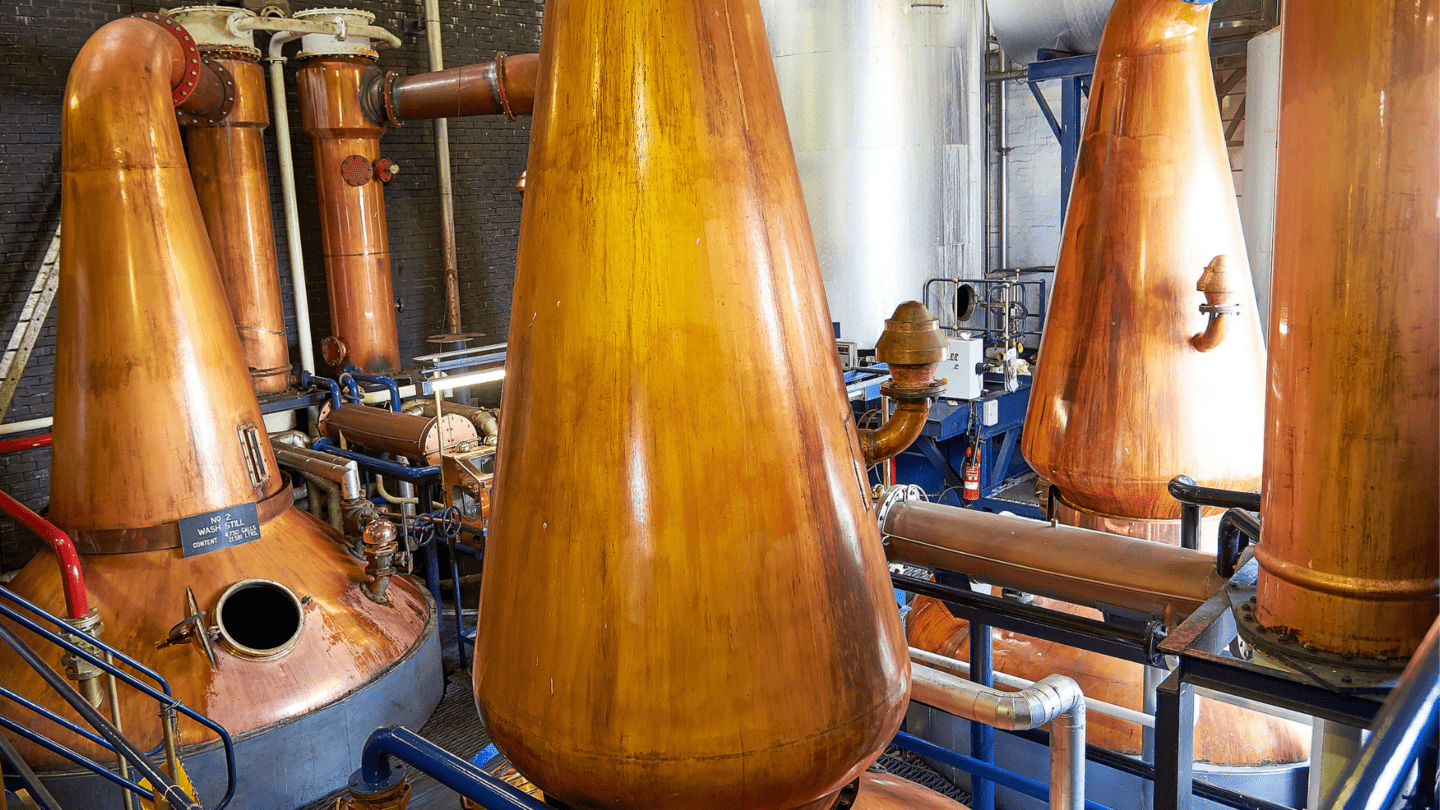
UK distilleries face a convergence of pressures that few other sectors can match. They are energy-intensive by nature, often remotely located, and operate under the scrutiny of some of the most ambitious industry-wide Net Zero targets in the UK economy. With over 90% of emissions in the whisky sector coming from direct, on-site fuel use (source: Scotch Whisky Association), and with wholesale energy prices remaining volatile alongside rising structural costs, the challenge of decarbonising while maintaining production reliability and commercial viability is significant.
This series from Equity Energies will explore the energy challenge facing UK distilleries, not as an abstract sustainability issue, but as a practical business and operational one. It will show why an integrated energy strategy, spanning procurement, on-site generation, fuel transition, and data-led optimisation, is becoming essential for producers who want to protect margins, meet their commitments, and remain competitive in the years ahead.
UK distilleries are defined by their rich, diverse, and often world-famous flavours, and by a production process that has barely changed in centuries. From vodka to whisky, and tequila to rum, the stills, the steam, and the carefully controlled temperatures are the constants that shape every bottle and define every unique taste. But the energy system that keeps those processes running is being transformed from the ground up, and the implications for the sector are more immediate and more complex than many producers have fully reckoned with.
A spirit of change: Decarbonising distilleries
There is no single answer to decarbonising a distillery. The right approach depends on location, scale, existing infrastructure, grid access, and proximity to fuel supply chains. But the options available today are more varied, more commercially viable, and more immediately accessible than many producers realise. Understanding what each can deliver, and in what sequence, is the essential first step.
The challenge is clear. Distilleries face a convergence of rising energy costs, tightening regulation, and ambitious Net Zero commitments, against a backdrop of energy-intensive processes, remote locations, and limited grid infrastructure. What that challenge demands is not a single technology decision but a sequenced, commercially grounded approach to decarbonisation.
HVO: the most accessible fuel switch available now
For distilleries currently running on oil-fired boilers or diesel-powered generation, Hydrotreated Vegetable Oil (HVO) represents the single most immediate decarbonisation step available. HVO is a renewable fuel manufactured from waste oils, fats, and residues. Crucially, it’s a drop-in replacement for fossil diesel and heating oil, meaning it can be used in existing boilers and generators with no modifications required to the equipment itself.
The emission reduction impact is significant. Switching from fossil diesel to HVO can deliver a lifecycle greenhouse gas reduction of around 89% (source: UK DEFRA), along with lower emissions of NOx, SOx, and particulate matter. For distilleries facing Medium Combustion Plant Directive (MCPD) compliance obligations on existing plant, the shift to HVO can also support improved performance against emission limit values, reducing the risk of permit breaches.
HVO is not a permanent solution, but it is a significant bridging step. It doesn’t remove the need for longer-term fuel switching and process change, but for distilleries that need to demonstrate progress right now, manage carbon costs under UK ETS, and avoid the capital expenditure and lead times associated with more fundamental infrastructure change, it offers a powerful and proven near-term solution.
Certas Energy, part of DCC Energy, is one of the UK’s leading suppliers of HVO and low-carbon fuels, with experience across mission-critical and industrial applications. For distilleries already supplied by Certas, or those looking to establish a relationship with a supplier who can manage the logistics of bulk fuel delivery to remote sites, the transition to HVO can often be completed quickly and with minimal operational disruption.
Combined Heat and Power to reduce grid dependency
Where grid import is constrained, particularly at remote sites where network capacity limits electrification or expansion plans, Combined Heat and Power (CHP) also presents a complementary solution. A CHP system generates both electricity and usable heat from a single fuel source, improving overall efficiency and reducing reliance on the grid for electricity supply. Crucially, CHP can run on a range of fuels including natural gas where available, biogas from on-site anaerobic digestion, LPG as an off-grid alternative, or HVO for a lower-carbon operation.
CHP also introduces the possibility of export income. Where a distillery generates more electricity than it consumes, Smart Export Guarantee (SEG) rates provide a return on exported power. Peer-to-peer arrangements or private wire connections to neighbouring businesses can improve on these rates further, creating a mutually beneficial local energy relationship. For distilleries with constrained export routes, licence-exempt supply, which applies to generators exporting below 5MW, can allow sharing of electricity without many of the levies that licensed supply requires, creating an additional commercial opportunity.
Centreco and DT Gen, both part of the DCC Energy group, provide complementary capabilities in this space. Centreco designs and installs solar PV and battery storage systems, including full EPC capability, while DT Gen supplies and maintains backup and standby generation units capable of running on diesel, LPG, HVO, or hydrogen. Together, they can support a distillery in building a generation and resilience package that is both commercially effective and compatible with its decarbonisation roadmap.
Electrification: the long-term pathway and its current limits
Electrification of heat represents the logical long-term destination for many distilleries. Electric boilers and high-temperature heat pumps can, in principle, deliver the steam and process heat that distilling requires with zero on-site emissions, provided the electricity supply is genuinely renewable. Projects such as Annandale Distillery’s Exergy 3 initiative, which pairs a 4 MW electric boiler with a 36 MWh thermal storage system using off-peak renewable power, demonstrate that a fully electric distillery is technically achievable.
But for most distilleries, again particularly those in remote locations with limited grid capacity, the honest assessment is that electrification of heat at scale remains a medium-to-long-term ambition rather than an immediately deliverable solution. Today’s electricity prices remain substantially higher than gas prices on a unit-of-heat basis, and network capacity constraints in more rural areas mean that the grid upgrades required to support large electric boilers can take years to secure. Plus, the capital investment involved is significant.
This doesn’t mean electrification isn’t an option; the trajectory of electricity prices relative to gas, the improving economics of on-site renewable generation, and the availability of flexible tariff structures all suggest that the business case for electrification will strengthen over time. The right approach is to plan for it now, identify which elements of the energy load could most practically be electrified first, and design on-site generation and storage systems that are sized to support that journey, even if the full transition takes a decade or more.
Procurement is part of this picture too. How electricity is bought, the contract structure, the tariff design, and the visibility of non-commodity charges directly shape the economics of any electrification decision. A flexible tariff that rewards shifting load to cheaper periods, or that reflects the value of power generated on-site, can materially improve the business case. This is where procurement and energy strategy come together: by working with a partner like Equity Energies, securing a competitive rate becomes part of a wider plan built around how and when a distillery actually uses power, converting electrification from an open-ended cost into a controlled, predictable investment.
Anaerobic digestion: converting by-products into value
One of the most distinctive features of distillery operations from an energy perspective is the by-product stream. The distilling process generates significant volumes of draff (spent grain from mashing) and pot ale (the residual liquid from the first distillation). Both are rich in organic material that can be converted into energy through anaerobic digestion (AD).
AD breaks down organic feedstocks to produce biogas, primarily methane, which can be used directly in boilers as a replacement for natural gas, or fed into a CHP unit to generate both heat and electricity on site. There’s again a substantial emissions benefit. Converting fossil fuel combustion to biogas from renewable, waste feedstock can reduce carbon intensity by 41% or more, with some case studies demonstrating reductions of over 60% where all eligible by-products are processed through AD (source: Scottish Enterprise).
For distilleries with a gas grid connection, there is an additional commercial angle. Injecting biomethane into the gas network qualifies for support under the Green Gas Support Scheme (GGSS), which pays 6.86 pence per kWh for the first 60 million kWh exported, followed by a series of tiered rates. With retail gas prices currently sitting in the 3-3.5 pence range, this creates a meaningful price-arbitrage opportunity for any distillery able to produce and export biomethane at scale.
At Balmenach Distillery in Knockando, anaerobic digestion of pot ale produces biomethane to fuel a CHP engine, supplemented by biomass, together supplying 100% of the site’s energy with a carbon intensity reduction from 1.5 to 0.5 kg CO₂ per litre produced. At Glenfiddich, AD of all waste residues produces biogas used in boilers and to fuel on-site trucks, cutting truck CO₂ emissions by 95% compared to diesel (source: Reuters). And at the North British Distillery in Edinburgh, an AD plant treating spent mash produces biogas that powers a 500 kW CHP unit, cutting 10,000 tCO₂ per year by displacing natural gas.
Not every distillery has the feedstock volume, the site space, the capital, or the gas network access to make AD viable. But for those that do, it can be one of the most commercially compelling decarbonisation routes available, offering simultaneous progress on Scope 1 emissions, energy cost, and income generation. When AD is integrated into a broader energy strategy alongside CHP, solar, storage, and strategic procurement, its value compounds further.
Creating a demand reduction foundation through heat recovery and energy efficiency
Before any fuel switch or generation investment can deliver maximum value, there is an important question that every distillery should address: how much energy is being used that doesn’t need to be? Demand reduction is the highest-value first step in any energy strategy, because every unit of heat or power that is not consumed is a unit that avoids cost, carbon, and infrastructure dependency simultaneously.
The potential in distilling is significant. For example, Mechanical Vapour Recompression (MVR) systems, which capture the heat energy in alcohol vapour that would otherwise be wasted and recycle it back into the distillation process, have demonstrated energy use reductions of up to 48% and carbon reductions of over 50% at operating sites (source: Canary Media). Heat exchangers applied to condenser cooling water offer their own returns. And building management systems (including lighting and HVAC) and operational scheduling improvements can also reduce unnecessary consumption across support infrastructure.
Heat recovery technologies can be foundational to good energy strategy, and any roadmap developed for a distillery client should assess demand reduction potential before sequencing fuel and generation investments. Reducing the total demand that needs to be decarbonised makes every subsequent intervention more affordable and more effective.
In the final part of this series, we bring these threads together to explore how distilleries can move from individual technology decisions to an integrated energy strategy, and why having the right partner is what makes the difference between progress and complexity.

Imraj Nijjar – Business Development Manager, Equity Energies
-
Market Insights
From 1st April, one of the least understood costs on your electricity bill changed. This is why it matters.
From the 1st April, UK organisations will face a sharp rise in electricity costs as TNUoS transmission charges reset for 2026/27, driving increases of more…
Find out more -
Market Insights
Five ways energy strategy can improve margins for food and beverage brands
Food and beverage brands operate in one of the most competitive and cost-sensitive sectors. Margins are constantly under pressure, from raw material volatility and labour…
Find out more -
Market Insights
Three pressures, one strategy: understanding the energy trilemma – What the energy trilemma really means for UK organisations
For years, the energy trilemma was a policy issue – governments balancing security, affordability and decarbonisation. Now it’s a business reality. Organisations are feeling it…
Find out more