Integrated energy strategy: making your energy decisions work together
Energy procurement delivers the greatest value when it works alongside generation, storage and demand management, rather than in isolation. By connecting these decisions, businesses can reduce costs, improve resilience and get more from their energy investments. So, what could an integrated energy strategy look like for your organisation?
The first three parts of this guide have covered how the energy bill has changed, why chasing the cheapest contract can increase total cost, and how procurement now carries operational consequences. Each of these points leads to the same conclusion: energy procurement delivers its greatest value when it works alongside other energy decisions, not independently of them.
For most organisations, that may not be how things work in practice. Procurement, on-site generation, battery storage and sustainability targets may still be treated as separate initiatives, managed by separate teams, and evaluated against separate criteria. But that separation may be costing money, reducing resilience and limiting the returns on each investment.
Why can standalone decisions underperform?
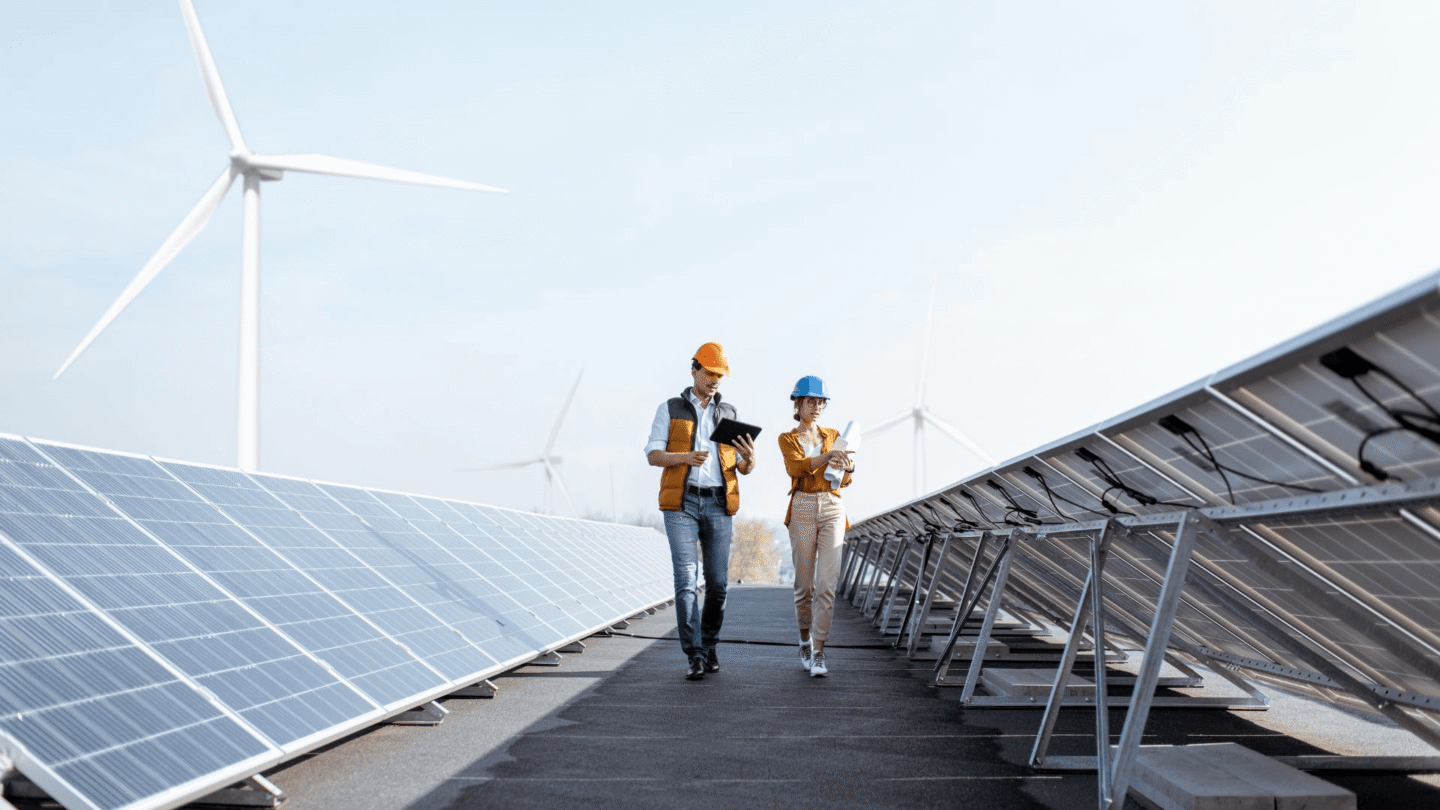
On-site solar generation can reduce the volume of electricity you import from the grid. Every unit generated and consumed on-site is a unit that avoids both the wholesale price and a proportion of the consumption-based non-commodity charges.
But that value is only fully realised if the supply contract reflects the reduced import volume. A procurement strategy designed without reference to on-site generation will typically over-contract for grid supply, missing the opportunity to reduce cost and exposure. The generation asset may still be delivering a return, but not necessarily the return it could.
Battery storage introduces timing control. It allows generated or stored electricity to be deployed when importing from the grid would be most expensive, reducing peak demand charges and enabling the organisation to shift consumption away from high-cost periods. But again, this flexibility only translates into financial value if the tariff structure is designed to reward it. A tariff that doesn’t differentiate by time of use, or that doesn’t reflect the organisation’s ability to manage demand, ignores that flexibility.
Tariff design is the mechanism that connects generation, storage and procurement into a single commercial model. The right tariff ensures that operational flexibility is financially rewarded, but the wrong tariff can counteract the benefits of investments that are working perfectly well at a technical level.
What does integration look like in practice?
An ideal integrated approach means procurement decisions are shaped by the organisation’s full energy position, not just its supply requirements.
- Supply contracts designed around forecast generation and storage capacity.
- Tariff structures selected to reward the flexibility that storage provides.
- Demand management, whether through operational scheduling, load shifting or peak reduction, factored into both procurement strategy and contract terms.
Achieving this requires closer collaboration across teams. Procurement will need visibility of generation output and storage capacity, operations to understand how demand patterns affect cost under the chosen tariff, and finance needs confidence that the assumptions behind each investment are consistent and mutually reinforcing.
None of this is technically complex. The data and tariff structures exist, and the commercial mechanisms are available. What’s often missing is the coordination: someone ensuring that the procurement decision, the generation investment, the storage deployment and the operational plan are designed as parts of the same system rather than evaluated in separate business cases.
How can we benefit from an integrated procurement strategy?
When all the right elements are aligned, the benefits can quickly compound.
Affordability improves because the organisation is reducing exposure to the fastest-rising elements of the bill – non-commodity charges and peak demand costs – while procurement manages the wholesale risk on a smaller imported volume.
Resilience strengthens because the organisation is less dependent on the grid at the moments when the grid is most stressed, and on-site generation and storage provide a buffer that procurement alone cannot.
Sustainability outcomes become more credible and durable because they are embedded in the commercial model. Carbon reduction through on-site generation is measurable, and its financial value is captured through the procurement structure itself.
These outcomes reinforce each other. An organisation that generates a proportion of its own electricity, stores it intelligently and procures the balance through a well-designed contract is in a stronger commercial position than one that addresses each element separately, even if the individual decisions, taken in isolation, appear sound.
From cost management to strategic advantage
Every organisation procures energy; that decision needs to be made regardless. The opportunity is in recognising what that decision has now become, and how to make it in an informed, strategic way.
Energy procurement in 2026 is no longer a simple exercise in securing the best available rate. Instead, it’s now the point where affordability, resilience and sustainability can come together.
When procurement is integrated, informed by operational data, aligned with generation and storage investments, and structured to reward flexibility, it can become a source of stability and competitive advantage in an energy system that will remain uncertain for some time.
Approaching procurement this way will not eliminate risk or guarantee outcomes, but it can help your organisation to be better positioned to manage both, and to adapt as market conditions continue to change.
-

Net Zero Pathway
Beyond unit price volatility: The business cost of energy market transformation
The cost of energy used to be a line item on the balance sheet, but they are now intertwined with one of the biggest industrial…
Find out more -
Market Insights
Three pressures, one strategy: understanding the energy trilemma – What the energy trilemma really means for UK organisations
For years, the energy trilemma was a policy issue – governments balancing security, affordability and decarbonisation. Now it’s a business reality. Organisations are feeling it…
Find out more -
Market Insights
Business Energy Consumption Explained: What Drives Usage and What to Do About It
From outdated hardware to operational habits, businesses often leak energy without realising it. Learn how to pinpoint your highest waste areas and implement smarter consumption…
Find out more