Maximising energy value – integrating energy strategy, solar and battery storage
Solar is now a familiar part of the energy mix, but too often deployed in isolation. Battery storage remains under utilised, despite its growing potential. The real opportunity lies in bringing both together within a smarter, integrated energy strategy, transforming energy from a passive cost into something actively managed.
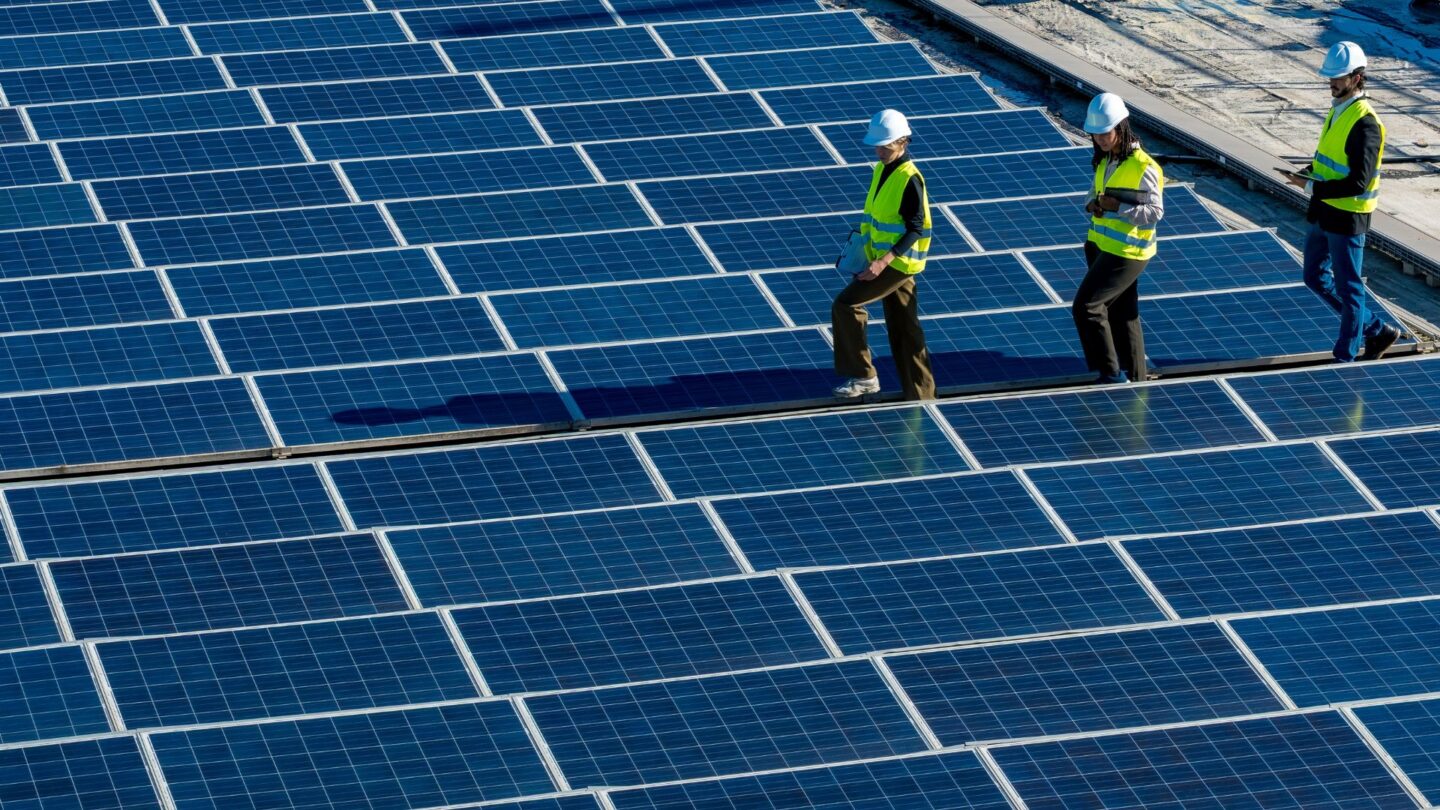
Solar has become an increasingly familiar part of the energy conversation. For many organisations, on-site generation has become associated with visible sustainability credentials combined with the opportunity to reduce energy costs. As a result, solar projects are often delivered as standalone initiatives, assessed largely on their individual business case and carbon impact.
Battery storage, by contrast, remains far less well understood. While interest is growing, many organisations still view batteries as a possible resilience back-up or a potential future consideration, rather than as an active commercial asset. This is despite the fact that battery prices have reduced significantly in recent years, changing the economics and creating a real opportunity to maximise the value of on-site generation, even when the sun is not shining.
What is least understood is the combined impact of solar and battery storage when they are not only designed together, but used intelligently and connected strategically to the grid, as part of an integrated energy strategy. It’s within this strategic deployment that the real opportunity exists.
By introducing energy management and tariff optimisation into the picture, you’ll unlock far greater value from both technologies, enabling more responsive interaction with the grid, while shifting from passive consumption to active participation. A system-level approach is how the available commercial, operational and carbon value can be realised.
At the same time, non-wholesale costs continue to rise year on year, with peak charges and network costs accounting for an ever-greater share of total energy spend. Without a joined-up approach, organisations remain exposed to these pressures, even after investing in on-site assets.
That’s why we’re framing the new, joint proposition between Equity Energies and Centreco as a means of maximising energy value by integrating strategic management, solar and storage.
By bringing together strategic energy management and tariff optimisation from Equity Energies, with the design and delivery of solar and battery infrastructure from Centreco, on-site generation, storage and tariffs are intended and implemented as one integrated solution. This enables you to actively manage when energy is generated, stored, imported and exported, rather than simply consuming power as it arrives from the grid, or when it is generated on-site during daylight hours.
What’s most exciting is that when these elements work together, the dynamics change. Batteries can be used to avoid peak periods, reduce exposure to volatile pricing and smooth demand profiles. They allow you to take advantage of increasingly common periods of negative wholesale pricing, charging when supply outweighs demand and prices fall below zero, then using or exporting that energy when prices are highest. In organisations with multiple sites, excess energy generated on one location can also be allocated across the wider estate through peer-to-peer Power Purchase Agreements (PPAs), allowing even greater value to be captured from on-site generation, rather than exporting it directly to the grid.
Over time, these approaches turn energy from a passive cost into something that can be actively managed.
Just as importantly, this changes your organisation’s relationship with the grid. Rather than sitting at the end of the system, you become an active participant within it. Flexible tariffs, on-site generation and battery storage allow you to respond to price signals and system pressures, rather than being exposed to them. That is what it means to be future grid ready.
Future grid readiness isn’t about going off grid or chasing complexity for its own sake. It’s about balancing affordability, security and sustainability (otherwise known as the energy trilemma) in a way that uniquely matches the needs of your organisation, and all within an energy system that is becoming more dynamic and decentralised. It’s also about being able to operate confidently as markets, regulation and grid conditions evolve.
When energy is managed this way, sustainability follows naturally. Lower carbon performance is not the primary objective, but the byproduct of better system design and better energy management. In our experience, this is how lasting progress is made; not through isolated projects, but through joined-up strategy that reflects the realities organisations face every day.
This joint proposition between Equity Energies and Centreco, and the integrated advantage it offers, is ultimately about thinking in joined-up systems, instead of individual components.
For organisations navigating cost pressure, volatility and the transition to a more flexible grid, this shift in thinking will make all the difference.

By Maureen Bray, Managing Director at Equity Energies
-

Net Zero Pathway
Beyond unit price volatility: The business cost of energy market transformation
The cost of energy used to be a line item on the balance sheet, but they are now intertwined with one of the biggest industrial…
Find out more -
Market Insights
Three pressures, one strategy: understanding the energy trilemma – What the energy trilemma really means for UK organisations
For years, the energy trilemma was a policy issue – governments balancing security, affordability and decarbonisation. Now it’s a business reality. Organisations are feeling it…
Find out more -

Market Insights
The new rules of energy procurement – Energy affordability: why the cheapest contract is no longer the lowest-cost decision
Energy procurement is no longer just about the lowest price. In 2026, true affordability means stability, control, and strategic foresight – aligning decisions with risk,…
Find out more