The heat is on: The unique energy challenge for UK distilleries
For centuries, the recipe for producing world class spirits has remained largely unchanged. The energy system behind it, however, is undergoing fundamental transformation. As distilleries navigate rising costs, stricter environmental regulation, and ambitious Net Zero targets, energy is becoming a strategic issue rather than simply an operational expense. In the first of this two part series, we examine the forces reshaping the industry and what they mean for producers across the UK.
Series overview
UK distilleries face a convergence of pressures that few other sectors can match. They are energy-intensive by nature, often remotely located, and operate under the scrutiny of some of the most ambitious industry-wide Net Zero targets in the UK economy. With over 90% of emissions in the whisky sector coming from direct, on-site fuel use (source: Scotch Whisky Association), and with wholesale energy prices remaining volatile alongside rising structural costs, the challenge of decarbonising while maintaining production reliability and commercial viability is significant.
This series from Equity Energies will explore the energy challenge facing UK distilleries, not as an abstract sustainability issue, but as a practical business and operational one. It will show why an integrated energy strategy, spanning procurement, on-site generation, fuel transition, and data-led optimisation, is becoming essential for producers who want to protect margins, meet their commitments, and remain competitive in the years ahead.
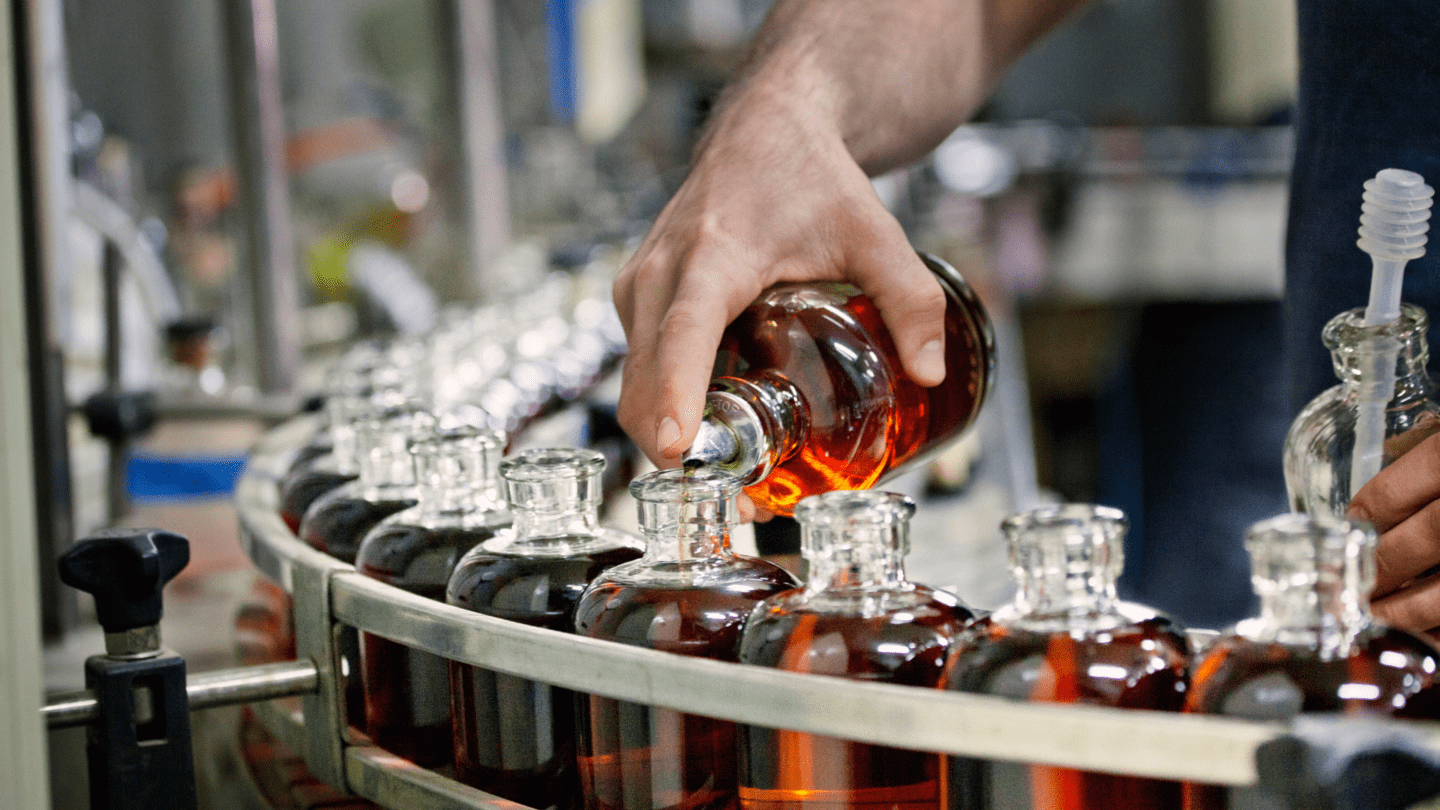
UK distilleries are defined by their rich, diverse, and often world-famous flavours, and by a production process that has barely changed in centuries. From vodka to whisky, and tequila to rum, the stills, the steam, and the carefully controlled temperatures are the constants that shape every bottle and define every unique taste. But the energy system that keeps those processes running is being transformed from the ground up, and the implications for the sector are more immediate and more complex than many producers have fully reckoned with.
The heat is on: The unique energy challenge for UK distilleries
Energy is not a minor concern for UK distilleries. It’s the central operational input. Heating, cooling, and steam generation can account for up to 70% of a typical distillery’s total energy use, and unlike most commercial users, that demand cannot easily be reduced, shifted, or interrupted. Production quality depends on consistent, high-temperature heat delivered reliably across every stage of the process. When energy fails, or becomes prohibitively expensive, so too does the product.
That dependency has long been managed through a straightforward relationship with fossil fuels: oil and gas that could be sourced, stored, and burned with relative predictability. But that relationship is under pressure from multiple directions simultaneously. The cost of energy is rising structurally, not just at the wholesale level, and regulation is tightening. Added to this, the sector’s own Net Zero commitments have set the clock running on a transition that is, for many sites, still far from clear.
Distilling is an energy-intensive process with no room for disruption
Distilling is, at its core, a thermal process. The mashing, fermentation, distillation, and maturation stages all demand energy. Steam heat must reach and maintain specific temperatures, while conversely cooling systems must operate within tight tolerances. Interruptions in supply are not simply inconvenient; they can compromise an entire batch, damage equipment, or halt production entirely.
This makes distilleries genuinely different from most commercial or industrial energy users. The flexibility that other businesses can bring to energy management, by shifting load, reducing consumption during high-cost periods, or tolerating brief supply interruptions, is mostly absent. The energy profile of a working distillery is close to continuous and non-negotiable, a reality that shapes everything about how the sector needs to approach energy strategy.
It also means that decarbonisation is not simply a procurement challenge. Switching energy supplier, procuring renewable electricity, or changing tariff structure can all contribute to the journey, but they cannot complete it. The core issue is one of process engineering: the heat that fires distillation needs to come from somewhere other than fossil fuels, and finding a reliable, affordable, and deliverable alternative is a fundamentally different kind of problem.
Remote by nature and constrained by infrastructure
Geography compounds the challenge. Some of the UK’s most celebrated whisky distilleries, for example, are located in rural or remote areas: the Scottish Highlands and Islands, the western coastlines, and the uplands of Wales and England. While recent years have seen a surge in smaller, independent distillers springing up in urban locations, the very nature of the alcohol manufacturing process, especially at scale, means distilleries tend to be situated in more rural sites. These locations can be integral to the identity of what is produced there, but they are also, in energy terms, among the most constrained in the country.
Weak grid connections are commonplace in these areas, so the infrastructure needed to bring significant quantities of grid electricity to remote sites, or to export electricity from on-site renewables, is often either absent or insufficient.
This has two consequences:
- It limits the availability of grid-connected renewable technologies. Electrification of heat requires both the power supply and the network capacity to support it, and in many rural areas, neither is readily available.
- It entrenches reliance on fuel delivered by road. Oil has historically been the default for off-grid heating, and it remains the dominant fuel at many distillery sites today.
Grid connection upgrades can, in theory, resolve some of these constraints, but they are slow and expensive, often taking years to progress through planning and construction. In the meantime, distilleries continue to operate with the infrastructure they have, and their energy strategy must work within those confines.
Rising costs and tightening compliance pose dual threats
The financial landscape is becoming more complex at a time when the operational challenge for distilleries is intensifying. Wholesale energy markets have remained volatile, and while prices have retreated from the peaks of the 2021-22 energy crisis, current world events mean they remain well above pre-crisis levels and are far from settled. But wholesale cost is increasingly only part of the picture.
Non-wholesale or non-commodity charges, the regulated, infrastructure-linked costs that fund the transformation of the UK’s energy system, now represent more than half of the total electricity bill for most commercial users and are rising steadily. For distilleries with significant electricity demand across lighting, refrigeration, and process equipment, this structural inflation is adding cost that procurement alone cannot offset. This also presents a barrier to electrification of the distilling process, as the business case is not one that any reasonable CFO is likely to sanction.
At the same time, carbon-related regulation is tightening across several fronts:
- UK Emissions Trading Scheme (UK ETS): rising carbon prices apply to on-site fuel combustion, with direct financial exposure for any distillery burning fossil fuels for heat and steam.
- Medium Combustion Plant Directive (MCPD): distilleries operating boilers or heaters with thermal inputs between 1 and 50 MWth are required to hold environmental permits and comply with emissions limits for NOx, SO₂, and particulate matter. Deadlines for existing plant between 5 and 50 MWth passed in January 2025; smaller plant (1-5 MWth) must comply by January 2030. The penalties for non-compliance are severe and can include fines of up to £250,000 and suspension of operations.
- Reporting requirements: the Streamlined Energy and Carbon Reporting (SECR) framework (amongst others) is increasing the expectation on producers to baseline, monitor, and demonstrate credible progress on carbon reduction, adding reporting obligations on top of operational ones.
Together, these pressures are creating a cost and compliance environment in which doing nothing is not a viable position.
A more urgent whisky mandate: 2040, not 2050
The Scotch Whisky Association (SWA) has committed to reaching Net Zero by 2040; five years ahead of Scotland’s own national target and a decade ahead of the UK’s. Over 140 distilleries have signed up to this commitment, and several of the sector’s leading players, including members of the SWA’s council, have set even more ambitious individual targets, with some aiming for Net Zero by 2030.
While this doesn’t apply to other types of distillers, the desire to demonstrate progress is still present. A survey by The Gin Guild recently found that 69% of gin consumers consider sustainability when buying, an insight that is being used to encourage members to adopt more transparent and credible environmental standards.
The scale of the challenge is significant. Figures from the SWA show scope 1 emissions, those arising directly from fuel combustion on site, account for the vast majority of a distillery’s carbon footprint. In 2023, UK Scope 1 gross emissions across the whisky sector were recorded at over 541,000 tCO₂e, against a total energy use of more than 3,000 GWh. These are emissions that cannot be offset through electricity procurement or certificate purchasing alone; they require actual fuel switching, process change, or a combination of both.
The good news is that progress is possible. The whiskey sector has already halved its emissions since 2009 (source: Scotch Whisky Association). Innovation is active, with distilleries across Scotland and the wider UK trialling biomass, anaerobic digestion, electrification, and hydrogen at various stages of development. The tools to make progress exist; what is increasingly required is the strategic clarity to deploy them in the right sequence, at the right pace, and in a way that maintains commercial viability throughout.
Rendering a compliance burden into a strategic opportunity
While the distilling process itself has not changed in centuries, the energy system around it is being rebuilt from the ground up. For distilleries, this is an operational reality that is already affecting costs, compliance obligations, and the long-term commercial outlook.
The risk for any type of producer that approaches this challenge reactively is not just falling behind on sustainability commitments but finding themselves exposed to rising costs they cannot control, compliance failures they did not anticipate, and operational constraints that limit their ability to grow and invest.
The opportunity is to build an energy model that is more resilient, more cost-predictable, and better aligned with the direction the market, the grid, and the regulatory environment are all heading. That is not a question of finding the right single technology, but of building the right integrated approach.
In part two of this series, we look at the practical options available to distilleries seeking to reduce emissions and manage energy costs, and assess what each can realistically deliver, at what cost, and in what timeframe.

Imraj Nijjar – Business Development Manager, Equity Energies
-
Market Insights
From 1st April, one of the least understood costs on your electricity bill changed. This is why it matters.
From the 1st April, UK organisations will face a sharp rise in electricity costs as TNUoS transmission charges reset for 2026/27, driving increases of more…
Find out more -

Market Insights
Five ways energy strategy can improve margins for food and beverage brands
Food and beverage brands operate in one of the most competitive and cost-sensitive sectors. Margins are constantly under pressure, from raw material volatility and labour…
Find out more -
Market Insights
Three pressures, one strategy: understanding the energy trilemma – What the energy trilemma really means for UK organisations
For years, the energy trilemma was a policy issue – governments balancing security, affordability and decarbonisation. Now it’s a business reality. Organisations are feeling it…
Find out more