Confidence in the numbers: what’s really holding SMEs back from CPPAs?
For many SMEs, CPPAs are becoming an increasingly attractive route to price certainty, operational resilience and lower‑carbon electricity. However, while interest is growing, uptake is often slowed not by a lack of ambition, but by uncertainty around the commercial numbers and how they stack up in real‑world market conditions.
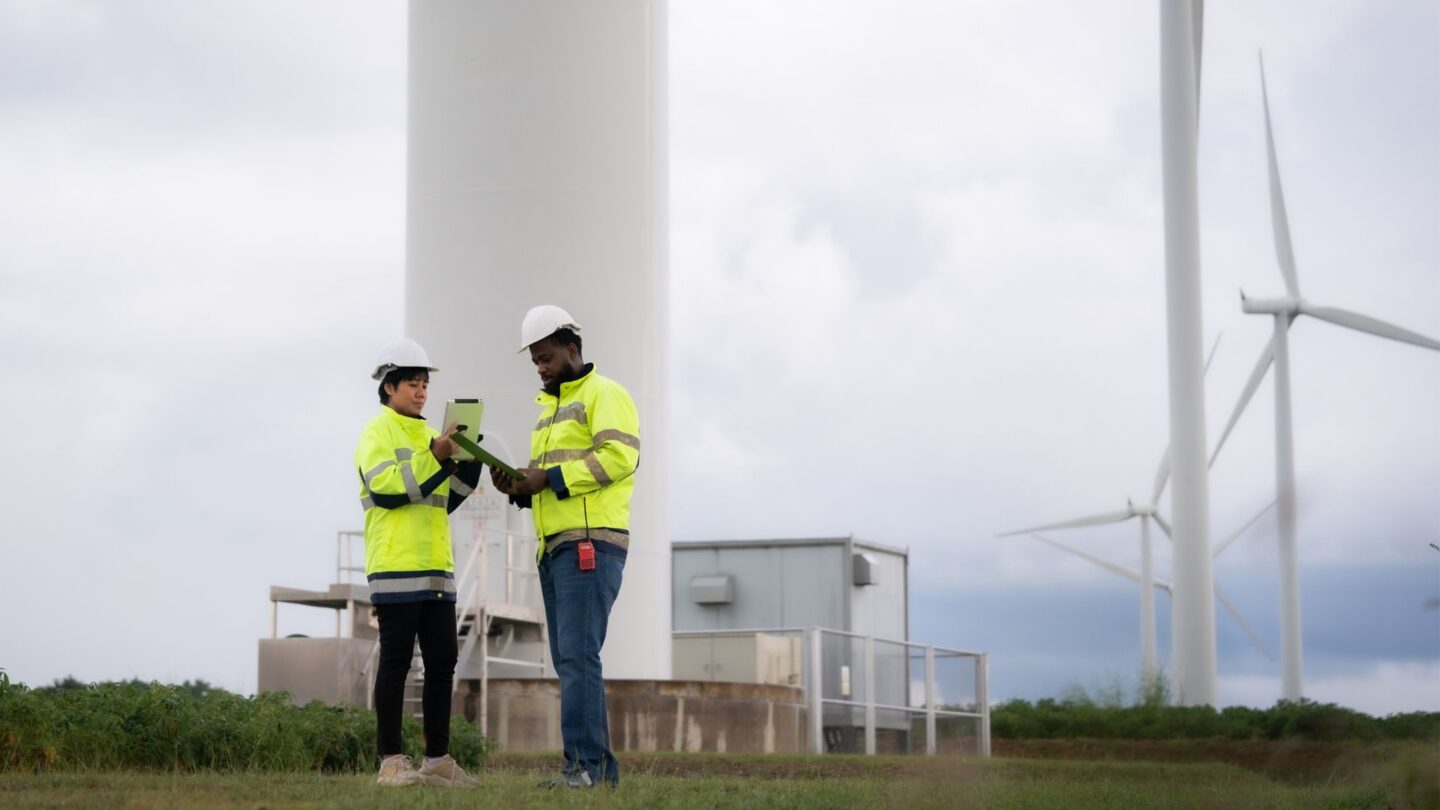
For many SMEs, the case for renewable energy procurement has never looked stronger.
Continued market volatility, persistent pressure on electricity costs and increasing scrutiny around sustainability commitments are all pushing renewable procurement higher up the agenda. At the same time, Corporate Power Purchase Agreements, or CPPAs, are no longer seen solely as a tool for major industrial energy users. Interest is growing across mid-sized organisations looking for greater price certainty, improved resilience, and a clearer route to lower-carbon electricity.
This shift is also being recognised at policy level. Earlier this year, the UK government launched a call for evidence aimed at identifying how the CPPA market can be developed further, specifically to help organisations access stable, competitively priced electricity.
But despite this growing appetite many SMEs are still struggling to implement CPPAs.
Alongside structural barriers such as contract complexity, credit requirements and transaction costs, in my experience working with clients the barrier is rarely ambition. More often, it’s confidence in the numbers.
Bringing together theory and commercial reality
Lots of organisations understand the theoretical benefits of a CPPA, and the value of longer-term price certainty, reduced exposure to wholesale market volatility, and the ability to support their sustainability goals through traceable renewable generation can bring.
But it could be suggested that decisions tend to slow down when these benefits need to be translated into a robust commercial case; one that’s relevant and specific to the individual organisation in question.
For SMEs in particular, the practical barriers can also feel significant. Credit strength and covenant requirements are often an early consideration, particularly where generators or suppliers need long-term confidence in the purchasing business.
Demand uncertainty can also create a reason to hesitate. For growing businesses, multi-site operators, or organisations with changing operational footprints, forecasting future electricity demand over a ten to fifteen-year period is rarely straightforward.
Understanding the practical barriers
Next, there is the question of risk.
How much volume should be committed?
What happens if demand falls below contracted levels?
How should a sleeved CPPA be compared against a supplier-backed renewable contract or a more flexible procurement strategy?
These are very real considerations, and often the points where internal decision-making stalls. Finance teams understandably want budget certainty and a clearly modelled return profile, but procurement teams may prioritise flexibility. Sustainability teams are focused on demonstrable carbon outcomes, and leadership teams want confidence that the decision supports both short-term commercial priorities and longer-term strategic resilience.
Without a clear view of risk-adjusted value, alignment across these stakeholders can be extremely difficult.
The role of financial modelling
This is where structured commercial and financial analysis becomes critical. In practice, what often unlocks progress is not a change in appetite, but a clearer understanding of the trade-offs.
Detailed cashflow modelling will help an organisation understand how a CPPA performs over time compared with alternative procurement routes, particularly when incorporating shape risk, imbalance exposure and non-commodity cost dynamics. NPV analysis enables decisions to be grounded in long-term value rather than headline unit rates alone.
Sensitivity modelling and downside stress testing will also help bring risk into the open, allowing leadership teams to understand the implications of lower-than-expected demand, changing market conditions, or different pricing assumptions.
When organisations can compare options on a like-for-like basis, internal decisions become much more straightforward.
Our recent work with clients has shown that once financial modelling is clearly laid out, the conversation changes and decisions are reached much more quickly. What initially felt difficult and complex fast becomes a more structured and logical commercial decision.
Embracing commercial confidence
Reaching that point of clarity is particularly important in today’s market.
Organisations are under pressure not only from wholesale volatility, but from the increasing weight of non-commodity costs and the wider structural costs of the GB energy system.
In this context, CPPAs go beyond being a standalone sustainability tool, to form part of a broader energy procurement and risk management strategy.
That’s a very real and powerful opportunity for SMEs, shifting the conversation from whether procuring renewable power is strategically attractive, to ensuring the commercial case is clear enough to support confident action.
Because for SMEs, the real barrier is rarely ambition. It’s confidence in the numbers and confidence in how those numbers behave under real market conditions.

By Natalie Oliynyk, Senior Trader – Equity Energies
-

Market Insights
Are energy savings closer than you think? Why EII starts with getting your SIC code right
Rising electricity costs are hitting energy‑intensive organisations hard – yet many could unlock major savings through Energy Intensive Industries (EII) relief. With non‑commodity costs climbing,…
Find out more -
Market Insights
Beyond the unit rate: Understanding, managing and mitigating the rise of non-wholesale energy costs.
In part two of this three part series, we look at the components of non-wholesale energy costs. From TNUoS and DUoS to the Capacity Market…
Find out more -
Market Insights
Three pressures, one strategy: understanding the energy trilemma – What the energy trilemma really means for UK organisations
For years, the energy trilemma was a policy issue – governments balancing security, affordability and decarbonisation. Now it’s a business reality. Organisations are feeling it…
Find out more