How to Reduce Business Energy Consumption Across a Complex Estate
A practical guide for organisations looking to reduce carbon footprints, manage costs, and transition to renewable energy solutions to build long-term business resilience.
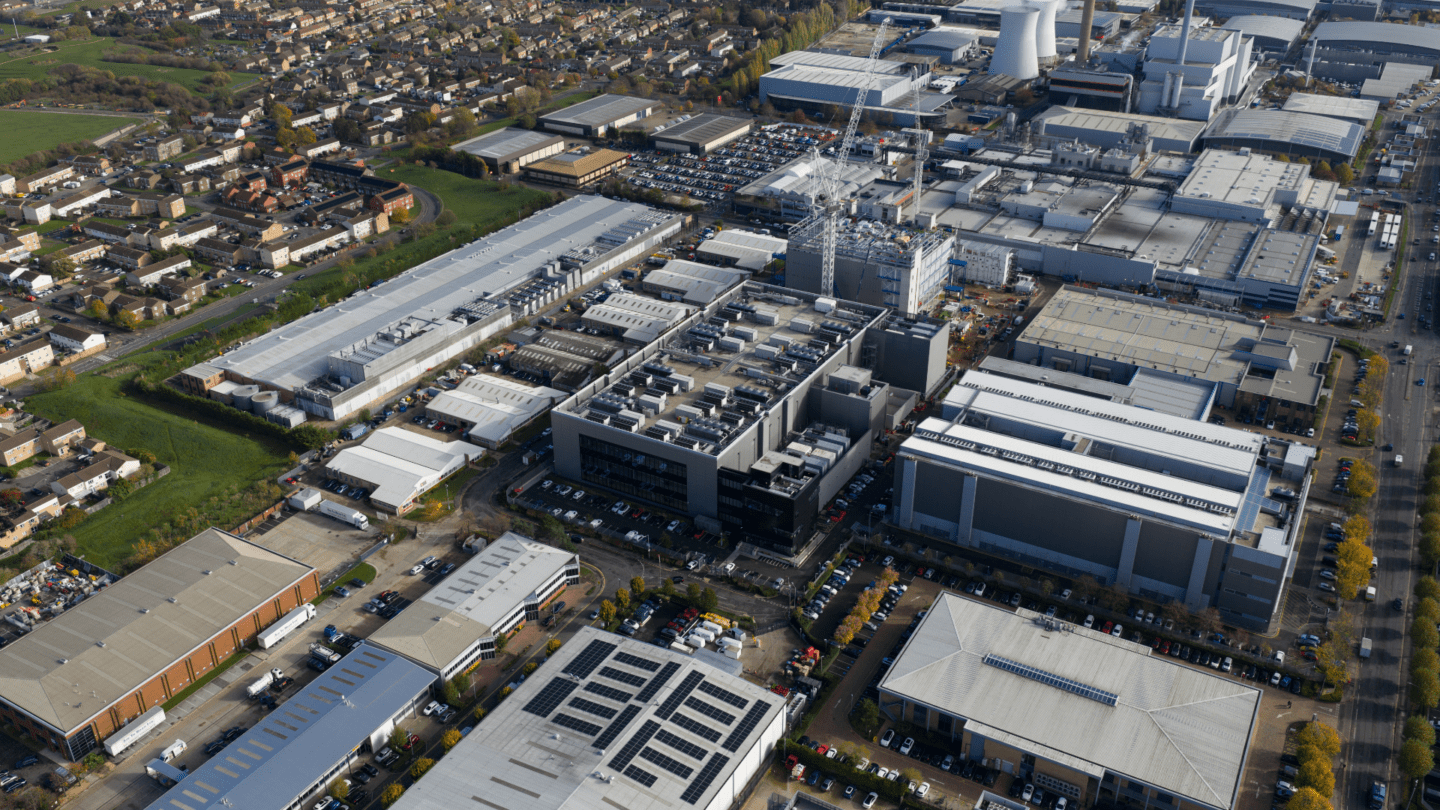
Reducing business energy consumption across a complex estate is not as simple as asking every site to “use less energy”.
For large organisations, energy use is shaped by a wide mix of buildings, operating hours, equipment, behaviours, controls, seasonal demand and site-level decisions. A head office, manufacturing facility, logistics hub, retail unit, healthcare site and warehouse may all sit within the same estate, but each one will have a very different energy profile.
That means a generic energy-saving checklist is rarely enough.
The organisations that make meaningful progress tend to take a more structured approach. They start by understanding where energy is being used, where usage looks unusual, what is operationally necessary, and which actions are likely to make the biggest commercial difference.
This guide explains how to reduce business energy consumption across a complex estate by building a practical reduction plan, improving visibility, prioritising the right opportunities and connecting energy usage with wider cost, carbon and operational goals.
Why reducing business energy consumption is different for complex estates
For a single-site business, energy reduction may focus on a small number of obvious actions: upgrade lighting, adjust heating controls, turn equipment off when not needed and review bills more regularly.
For a complex estate, the challenge is broader.
Large organisations often have multiple sites, multiple meters, different suppliers, varied operating models and inconsistent levels of local control. Some sites may have advanced monitoring. Others may rely on limited billing data. Some may have strong facilities support. Others may have local teams managing energy as one of many operational responsibilities.
This creates three common challenges.
First, it can be difficult to know where to start. If every site is using energy differently, a central team needs a reliable way to identify which locations or assets deserve attention first.
Second, usage patterns can be hard to interpret. Higher consumption may be caused by growth, weather, occupancy, longer operating hours or legitimate process demand. It may also be caused by waste, poor controls, equipment faults or billing issues.
Third, action needs to be realistic. A central energy strategy will only work if it can be translated into clear, practical steps for the people who manage sites day to day.
This is why reducing energy use in business requires more than good intentions. It needs data, governance, accountability and a plan.
Start with visibility, not assumptions
The first step is to understand the current position.
Many organisations want to move quickly into action, but without reliable visibility there is a risk of focusing on the wrong problems. For example, a site may appear to have high consumption simply because it is larger, busier or more energy-intensive than other locations. Another site may look average on total usage but have significant out-of-hours waste.
Good visibility should help answer:
- Which sites use the most energy?
- Which sites use more energy than expected?
- Where has consumption changed recently?
- Where is energy being used outside normal operating hours?
- Which meters have missing, estimated or inconsistent data?
- Which sites have the greatest cost or carbon impact?
- Which patterns need further investigation?
For complex estates, this visibility needs to go beyond a monthly bill review. It should be possible to look at consumption across the estate, by site, meter, time period and trend.
Equity Energies’ MY ZEERO platform is a relevant internal link here, because it supports visibility of consumption across assets, buildings and sites. That kind of visibility helps organisations move from general concern about energy use to a clearer understanding of where action may be needed.
Build a reliable consumption baseline
A business energy reduction plan should begin with a baseline.
A baseline is the reference point against which future changes can be measured. Without it, it becomes difficult to know whether consumption has genuinely improved or whether usage has simply shifted because of weather, occupancy, production levels or estate changes.
A useful baseline should include:
| Baseline area | Why it matters |
| Historic consumption | Shows typical usage patterns and seasonal variation |
| Site type | Helps avoid unfair comparisons between different operating models |
| Meter coverage | Confirms whether the data represents the full estate |
| Operating hours | Shows whether usage aligns with when sites are active |
| Occupancy or output | Adds context to rising or falling demand |
| Cost data | Helps prioritise opportunities with the greatest financial impact |
| Known site changes | Prevents misleading comparisons after refurbishments, closures or expansion |
The aim is not to create a perfect model before acting. It is to create a reliable enough view to make better decisions.
For example, if electricity consumption is rising across several sites, the baseline should help show whether that increase is linked to extended operating hours, seasonal cooling demand, new equipment, or unexplained usage outside normal activity.
Segment the estate before setting targets
One of the most common mistakes in energy reduction is applying one target across every site.
A blanket reduction target may look simple, but it can be misleading. Some sites may already be efficient. Others may have high but necessary process loads. Some may have major opportunities because of poor controls or outdated equipment. Others may have limited room for short-term improvement.
A better approach is to segment the estate into meaningful groups.
For example:
- offices
- retail or customer-facing locations
- warehouses and logistics sites
- manufacturing or production sites
- healthcare or specialist facilities
- high-consumption sites
- sites with unusual out-of-hours usage
- sites with poor data quality
Once the estate is segmented, it becomes easier to benchmark similar sites and set realistic expectations. An office should not be benchmarked against a production facility. A 24-hour operation should not be judged in the same way as a site that closes at 6pm.
Segmentation helps organisations focus on the right question: not “which site uses the most energy?”, but “which site is using more energy than it should, given how it operates?”
Identify the biggest reduction opportunities
Once the baseline is in place and the estate is segmented, the next step is to prioritise.
Most complex estates will have more potential actions than the organisation can realistically address at once. The priority should be to focus first on opportunities that are high-impact, practical and evidence-led.
The biggest opportunities often sit in these areas:
Out-of-hours consumption
Out-of-hours consumption is one of the clearest signs of avoidable waste.
If energy use remains high overnight, at weekends or during closed periods, it may suggest that heating, cooling, lighting, ventilation or equipment is running when it does not need to.
This is not always visible from monthly billing data. Half-hourly or more granular data is often needed to identify the pattern.
Typical actions include reviewing time schedules, checking building management system settings, resetting manual overrides and improving shutdown procedures.
Heating, cooling and ventilation controls
Heating, cooling and ventilation can make up a significant proportion of energy use, especially across offices, retail environments, education, healthcare, hospitality and large public buildings.
Reduction opportunities often come from better control rather than major replacement.
For example:
- aligning heating and cooling schedules with actual opening hours
- avoiding simultaneous heating and cooling
- reviewing setpoints
- improving zoning
- checking sensor performance
- ensuring manual overrides are not left active
- adjusting seasonal settings at the right time
These changes can be highly practical, but they require visibility and local accountability.
Lighting and occupancy patterns
Lighting upgrades can still be useful, particularly where sites have not fully moved to efficient systems. However, lighting performance is also about behaviour and control.
Energy reduction may come from:
- occupancy sensors
- daylight controls
- LED upgrades
- better zoning
- clearer shutdown procedures
- reviewing lighting requirements in low-use areas
For complex estates, the strongest approach is usually to identify which sites still have the biggest gap between current performance and reasonable best practice.
Equipment, process loads and maintenance
In energy-intensive environments, equipment and process loads may be the largest driver of consumption.
This might include compressed air, refrigeration, pumps, motors, ovens, production lines, medical equipment, laboratory systems or data infrastructure.
Here, the goal is not simply to reduce use, but to improve efficiency without disrupting operations.
Useful actions may include:
- reviewing maintenance schedules
- checking equipment run times
- identifying leaks or faults
- matching equipment operation to actual demand
- replacing inefficient assets where the business case is strong
- improving controls around process equipment
This is where operational input is essential. Central teams may spot the data pattern, but local teams often understand the practical cause.
Separate quick wins from strategic projects
A strong business energy reduction plan should include both short-term and longer-term actions.
Quick wins help build momentum and demonstrate progress. Strategic projects create deeper, more sustained improvement.
| Action type | Examples | Typical value |
| Quick wins | Adjust time schedules, reset controls, improve shutdown routines, review out-of-hours usage | Lower-cost actions that can be implemented quickly |
| Operational improvements | Maintenance changes, site procedures, local accountability, staff engagement | Practical improvements that require coordination |
| Data and reporting improvements | Better metering, regular reporting, exception tracking, usage dashboards | Stronger visibility and decision-making |
| Capital projects | LED upgrades, HVAC replacement, controls upgrades, building fabric improvements | Larger savings potential but higher investment and longer payback |
| Strategic planning | Forecasting, budget modelling, procurement alignment, carbon planning | Connects consumption reduction to wider business goals |
The mistake is treating all actions as if they are equal. They are not.
A control change may take days. A major plant upgrade may take months or years. A reporting improvement may not directly reduce consumption, but it may unlock better decisions across the whole estate.
Create a business energy reduction plan
A business energy reduction plan should turn insight into action.
For a complex estate, the plan needs to be practical enough for site teams, but structured enough for senior stakeholders to track progress.
A useful plan should include:
- The baseline
What is current consumption, cost and performance across the estate? - Priority sites or assets
Where are the biggest or most unusual opportunities? - The likely cause
Is the issue linked to controls, behaviour, equipment, data quality, operating hours or process demand? - Recommended action
What needs to change, and who needs to do it? - Expected impact
What is the likely effect on consumption, cost, carbon or control? - Owner and timeframe
Who is responsible, and when should the action be completed? - Measurement method
How will the organisation know whether the action worked?
This does not need to be overcomplicated. In fact, the best reduction plans are often simple, focused and evidence-led.
Connect energy reduction with budget forecasting
Energy reduction should not sit separately from budgeting.
If a business is planning to reduce consumption, that should eventually be reflected in forecasts. If usage is expected to rise because of operational growth, that also needs to be understood. Otherwise, finance teams may end up working from assumptions that no longer reflect the estate.
This is particularly important when energy prices are volatile or when the organisation is planning procurement activity.
A reduction plan can support more accurate forecasting by helping teams understand:
- expected future demand
- likely changes in consumption
- planned efficiency projects
- site openings, closures or refurbishments
- seasonal or operational changes
- areas where data is still uncertain
Equity Energies’ guide to forecasting energy costs and consumption is a natural supporting link here. For organisations that need more structured planning support, budget forecasting for energy also connects directly to this challenge.
Use reporting to maintain momentum
One of the hardest parts of reducing energy consumption is sustaining progress.
Many organisations run energy-saving initiatives, see an initial improvement, and then gradually lose momentum. This usually happens because actions are not tracked clearly, responsibilities are unclear, or reporting does not show whether the changes are still working.
Good reporting should keep the plan alive.
It should show:
- whether consumption is moving in the right direction
- which sites have improved
- which sites need further investigation
- whether out-of-hours usage has reduced
- whether data quality issues remain
- whether cost and consumption trends align with expectations
- whether additional action is needed
Equity Energies’ energy reporting and monthly insights page is a relevant internal link here, because regular reporting helps organisations move from isolated energy-saving actions to ongoing performance management.
Engage site teams with clear, practical actions
A central energy strategy will not work if site teams do not understand what is expected of them.
Site teams need practical, specific actions rather than broad instructions. “Reduce energy use” is too vague. “Check whether weekend HVAC schedules match actual opening hours” is much more useful.
A good site-level action should explain:
- what has been identified
- why it matters
- what needs to be checked
- who is responsible
- when it should be completed
- how the impact will be reviewed
This is particularly important where energy is only one part of someone’s role. Facilities managers, site leads and operations teams may be juggling multiple priorities. The easier the action is to understand, the more likely it is to happen.
Avoid the most common mistakes
Many business energy reduction plans fail because they are too generic, too data-light or too disconnected from the realities of the estate.
Common mistakes include:
- setting the same reduction target for every site
- focusing only on the highest-consuming locations
- ignoring out-of-hours usage
- relying on estimated or incomplete data
- treating energy reduction as a one-off campaign
- failing to involve site teams
- focusing on capital projects before checking controls
- not measuring whether actions have worked
- separating consumption planning from budget forecasting
- reviewing performance too infrequently
The biggest issue is often not a lack of effort. It is a lack of structure.
A more effective approach is to combine central visibility with local action. The central team identifies patterns and priorities. Site teams investigate and implement changes. Reporting then shows whether the action worked.
What good looks like in practice
For a large organisation, effective energy reduction is not just a list of actions. It is a way of managing the estate.
| What good looks like | What it means |
| Clear baseline | The organisation understands current consumption, cost and performance |
| Estate segmentation | Sites are grouped in a way that allows fair comparison |
| Prioritised opportunities | The biggest and most realistic actions are addressed first |
| Practical ownership | Each action has a responsible person or team |
| Reporting cadence | Progress is reviewed regularly, not once a year |
| Forecasting alignment | Consumption changes are reflected in financial planning |
| Continuous improvement | The plan evolves as data, operations and priorities change |
This is the difference between energy-saving activity and energy performance management.
A practical framework to reduce business energy consumption
For organisations that need a simple structure, the process can be broken into six stages.
1. Understand
Gather the data needed to understand current usage across the estate. This includes consumption, cost, meter coverage, operating hours and known site changes.
2. Benchmark
Compare similar sites and identify outliers. Look for unusual patterns, sudden changes and high usage outside normal operating hours.
3. Diagnose
Investigate the likely causes. Is the issue linked to controls, equipment, behaviour, process demand, weather, occupancy or data quality?
4. Prioritise
Rank opportunities by impact, feasibility, cost, urgency and operational risk.
5. Act
Implement the agreed actions with clear ownership and realistic timelines.
6. Monitor
Track whether consumption changes as expected. If it does not, revisit the diagnosis and refine the plan.
This framework is deliberately simple because complex estates need repeatable processes. The value comes from applying it consistently across the organisation.
Conclusion: reducing energy consumption starts with better control
To reduce business energy consumption across a complex estate, organisations need more than generic advice. They need a clear view of where energy is being used, why consumption is changing and which actions will make the biggest difference.
The most effective reduction plans are evidence-led, site-specific and connected to wider business priorities. They combine data visibility with practical action. They separate quick wins from strategic investment. They involve site teams. And they keep measuring progress after the first round of improvements has been made.
For large organisations, the goal is not simply to use less energy. It is to build better control over consumption, cost and performance across the estate.
Speak to our team about reducing business energy consumption
If your organisation needs a clearer, more structured approach to reducing energy consumption across a complex estate, Equity Energies can help.
From consumption visibility through MY ZEERO to monthly energy reporting and budget forecasting for energy, our team can help you understand where energy is being used and where improvement opportunities may exist.
Speak to our team to explore how your organisation can take a more controlled, evidence-led approach to energy reduction.
-

Market Insights
Procurement and energy resilience: why your energy supply is no longer a given.
Energy procurement is no longer just about securing the right price. With grid constraints, electrification and changing demand creating new operational risks, procurement is becoming…
Find out more -

Market Insights
Practical affordability: why cheaper doesn’t always mean better
The cheapest energy contract doesn’t always mean the lowest overall cost. With market volatility, changing demand patterns, peak demand charges and increasingly complex contract terms…
Find out more -
Market Insights
A practical guide to energy procurement: Understanding your energy bill
The cost of energy is no longer driven by wholesale prices alone. With non commodity charges now making up the majority of a typical commercial…
Find out more