The new rules of energy procurement – Energy security: why energy procurement is now a resilience decision
Energy security can no longer be taken for granted. In 2026, procurement drives resilience - ensuring reliable supply, managing risk, and aligning with affordability and sustainability to support long-term business continuity.

For a long time, energy security has been taken for granted. As long as you had a contract in place and the lights stayed on, supply was assumed to be reliable. Procurement focused on price, and security was a given. But this assumption no longer stands true.
In 2026, energy procurement goes beyond securing a supply contract. It has become a resilience decision that directly affects operational continuity, growth plans and risk exposure.
This shift sits at the heart of the energy trilemma, where security is inseparable from affordability and sustainability, and where decisions made in isolation can quickly have a negative impact on all three.
Security within the energy trilemma
Within the trilemma, security is shorthand for confidence of supply; knowing that energy will be available when it is needed, at a scale and reliability that supports your operations.
What’s changed is not the importance of security, but the conditions under which that security needs to be delivered and protected. Electrification may be increasing, but so too are the constraints the transition places on the grid. Add to this more complex pricing structures that are designed to reflect the changing nature of energy generation as renewables increase, and security of supply can no longer be assumed. It needs to be planned for.
Electrification is reshaping energy risk
As organisations electrify transport, heating and core processes, demand profiles change quickly.
Electric vehicle charging adds new peaks, and heat pumps increase winter electricity demand. Electrified processes create higher, more concentrated loads, and in many cases, where electricity is replacing fuels that were previously delivered independently of the grid, this can add even greater demand.
This in turn increases exposure to electricity supply constraints and pricing signals, and means that interruptions, delays or cost spikes can have a much greater operational impact than ever before.
The grid is under increasing strain
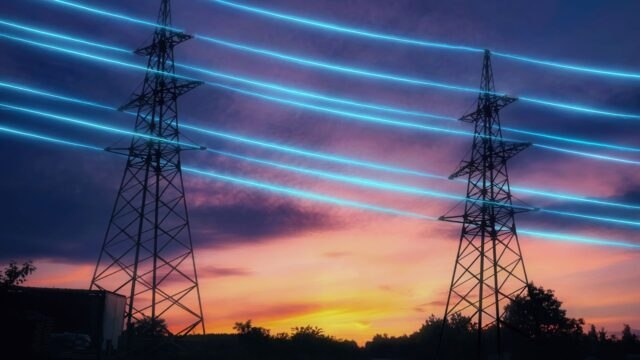
At the same time, the electricity grid is under growing pressure. Rising demand, ageing infrastructure and long connection queues are creating constraints across many regions and within almost every industry sector. Generation capacity continues to expand, but local and regional bottlenecks are still becoming more common.
From an organisational level, this can show up in subtle ways, through things like capacity limits, higher peak charges, restrictions on connection upgrades or increased sensitivity to peak pricing periods. It’s procurement decisions that influence how exposed an organisation will be to these pressures, because contract structures, tariff choices and volume strategies are effectively what govern how risk is shared between the organisation and the market. Security is an intrinsic element of how energy is bought.
Procurement affects uptime and continuity
That’s why, in this environment, procurement decisions increasingly affect operational resilience.
A strategy that relies heavily on short-term pricing without flexibility can leave organisations exposed during periods of system stress, and poorly aligned contracts can increase costs precisely when energy is most critical. Inaccurate forecasting can lead to under-provisioning or unexpected penalties.
The key point is that these risks are not theoretical; for energy-intensive or time-critical operations, even short periods of disruption or extreme pricing can have a dramatic and disproportionate impact.
The need to secure supply now means asking different questions during procurement. How sensitive are operations to price spikes? What happens if demand grows faster than expected? How much flexibility exists to respond to system constraints?
The risks of misalignment
To me one of the biggest threats to energy security is actually an internal one: misalignment between different teams and departments.
Procurement teams might optimise for price without full visibility of operational requirements, while operations teams may plan electrification or expansion without understanding how procurement structures price risk. Sustainability teams may also be pushing for more sustainable energy solutions, but without considering their interaction with supply contracts.
Individually, each decision may well make sense, but collectively they can undermine resilience. Security will be strongest when procurement, operations and forecasting are aligned around a shared understanding of risk and demand.
Security decisions can create trade-offs
Security-focused decisions, if made in isolation, can also create challenges elsewhere in the energy trilemma. Over-contracting to protect supply can increase costs, but conservative strategies might limit flexibility or slow progress on sustainability goals. Focusing only on resilience without considering price exposure can introduce volatility into budgets.
This is why security cannot be treated as a standalone objective. It must be balanced alongside affordability and sustainability through integrated planning.
Procurement is part of resilience planning
The most important takeout here is that energy procurement needs to sit firmly within business continuity planning, because it shapes how risk is managed, how predictable costs are, and how well your organisation can adapt to change. It influences whether electrification supports growth or introduces new constraints, and it determines how resilient operations are in the face of volatility and system pressure.
Security is something procurement actively delivers through structured thinking, insight-informed strategy and internal alignment.
In the final part of this series, we will look at sustainability and why sustainable energy decisions only deliver their full value when they are integrated into procurement strategy, rather than treated as separate or bolt-on initiatives.

Kelly Lovesy – Sales Director, Energy Management Services
-
Market Insights
Procurement and energy resilience: why your energy supply is no longer a given.
Energy procurement is no longer just about securing the right price. With grid constraints, electrification and changing demand creating new operational risks, procurement is becoming…
Find out more -

Market Insights
Practical affordability: why cheaper doesn’t always mean better
The cheapest energy contract doesn’t always mean the lowest overall cost. With market volatility, changing demand patterns, peak demand charges and increasingly complex contract terms…
Find out more -
Market Insights
A practical guide to energy procurement: Understanding your energy bill
The cost of energy is no longer driven by wholesale prices alone. With non commodity charges now making up the majority of a typical commercial…
Find out more